

The Osaka Five
Five brands, Japanese denim, and how it all comes together

I wouldn’t call myself a denim head, but I do love Japanese denim. It’s another case of being an accidental collector, I’m afraid. There’s probably a better word for that.
Still, I’ve found there’s nothing quite like a well-made pair of jeans, and no one quite does it like the Japanese.
Now, I know these brands didn’t exist during Ivy’s so-called golden age, or its founding era. But if you’re properly into it, you’ll know Ivy isn’t just about what was worn on campuses. If it were, it would just be a game of dress-up.
I saw a video recently resurface of Jason Jules talking about this. I’m paraphrasing, but he described Ivy as a wardrobe rather than a look. A set of pieces that can be mixed, matched, and relied upon. Interchangeable, but always working together. He tends to get it right.
For me, my interest in Ivy has naturally merged with my interest in Japan, and I think that’s the case for a lot of people.
So when you start getting into denim, you inevitably hear about the Osaka Five. But what does that actually mean?
The term refers to a group of pioneering Japanese denim brands based in Osaka, in the Kansai region of Honshu. Osaka sits on Osaka Bay and acts as a central hub between cities like Kyoto, Kobe, and Nara.
In this piece, I’m going to look at each of the five brands, a bit of their backstory, and a few examples of what they’ve produced, going in order of when they were founded.
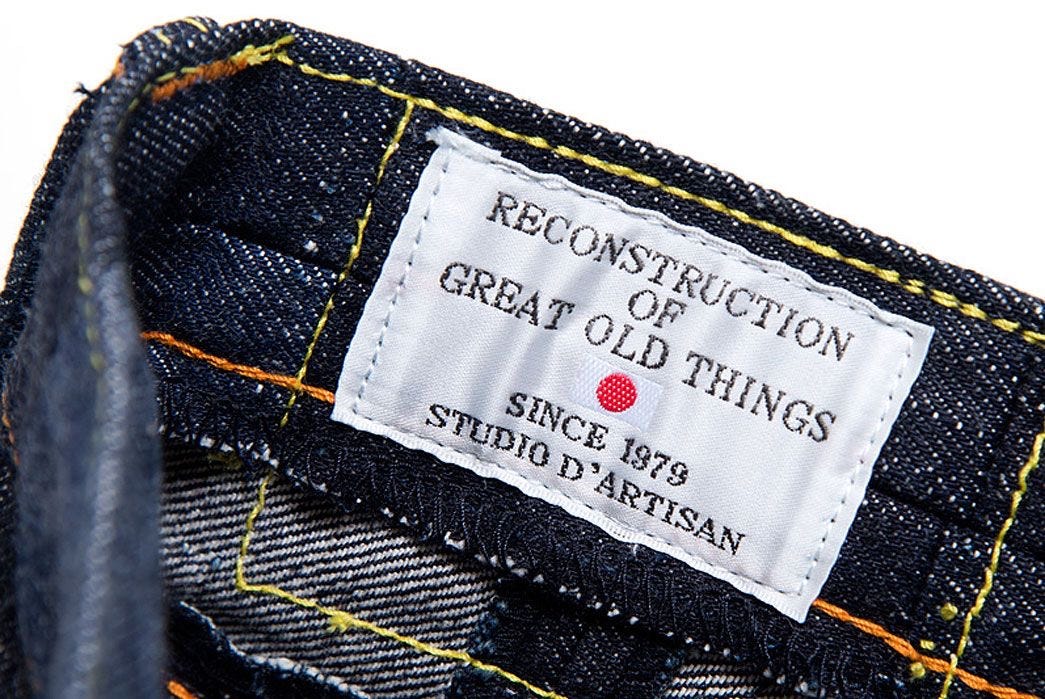
Studio D’Artisan - 1979
Studio D’Artisan was the brand that kicked things off in Osaka in 1979, founded by Shigeharu Tagaki.
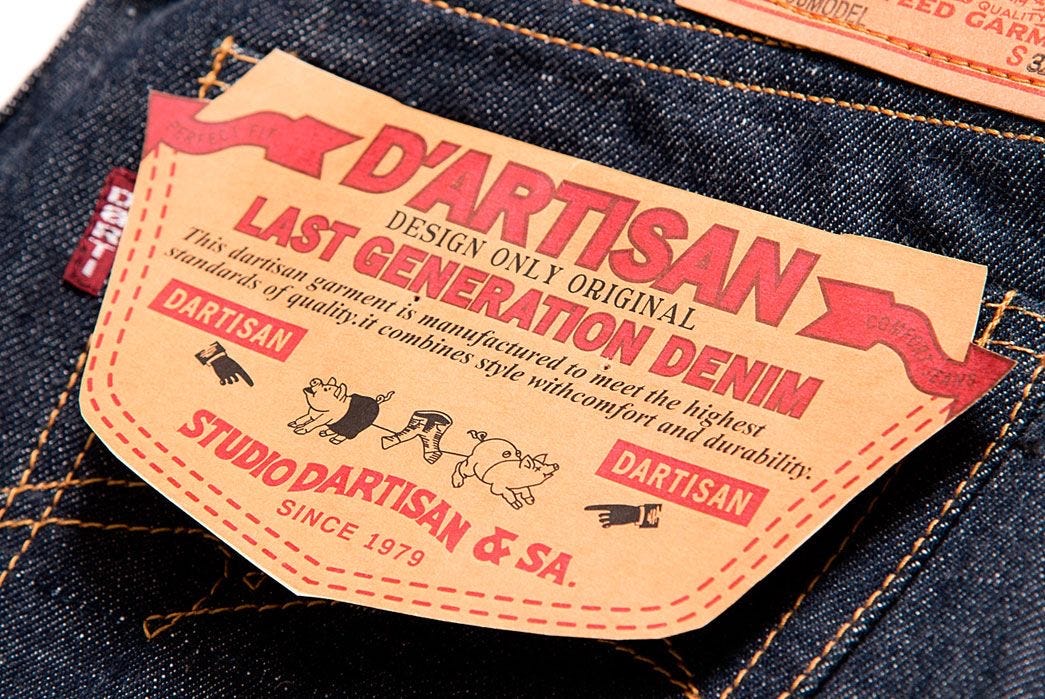
You may have seen their tongue-in-cheek take on the Levi’s Two Horse logo, swapping the horses for two pigs in a tug of war over a pair of jeans. It’s playful, but it also says quite a lot about their approach.
It’s hard to overstate just how important the brand is. They were among the first to seriously attempt reproducing vintage American denim using Japanese methods, and in doing so, proved that Japan could go beyond imitation and, in some cases, match or even surpass the originals.
While they do produce faithful reproductions, they’ve never been limited by that. They’ve also incorporated Japanese techniques like sashiko and natural dyeing into their work, which gives their pieces a distinct identity rather than feeling like straight copies.
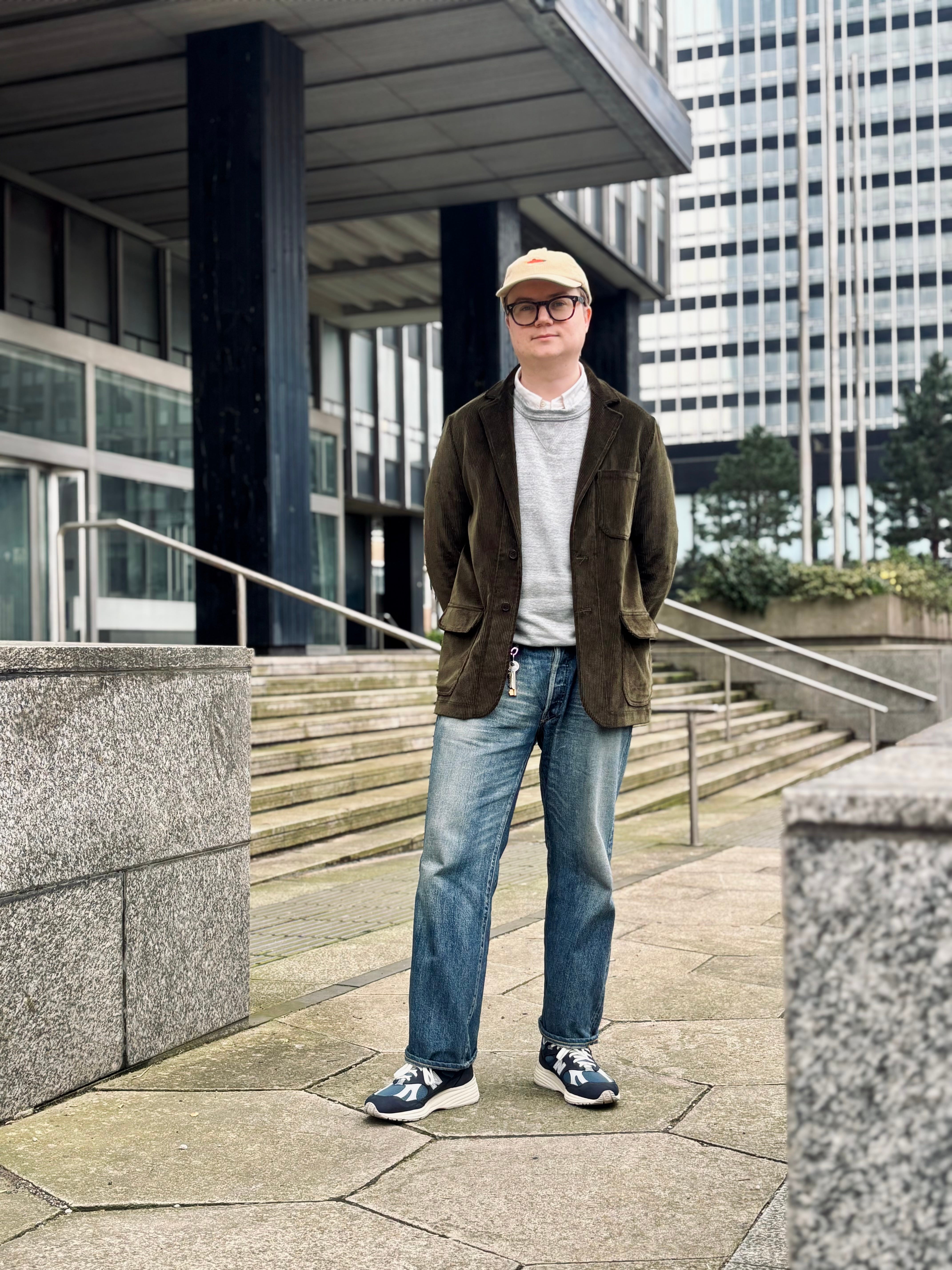
My first pair of SDA’s were the SD-108. A relaxed taper in their house 15oz indigo denim, and a really easy place to start.
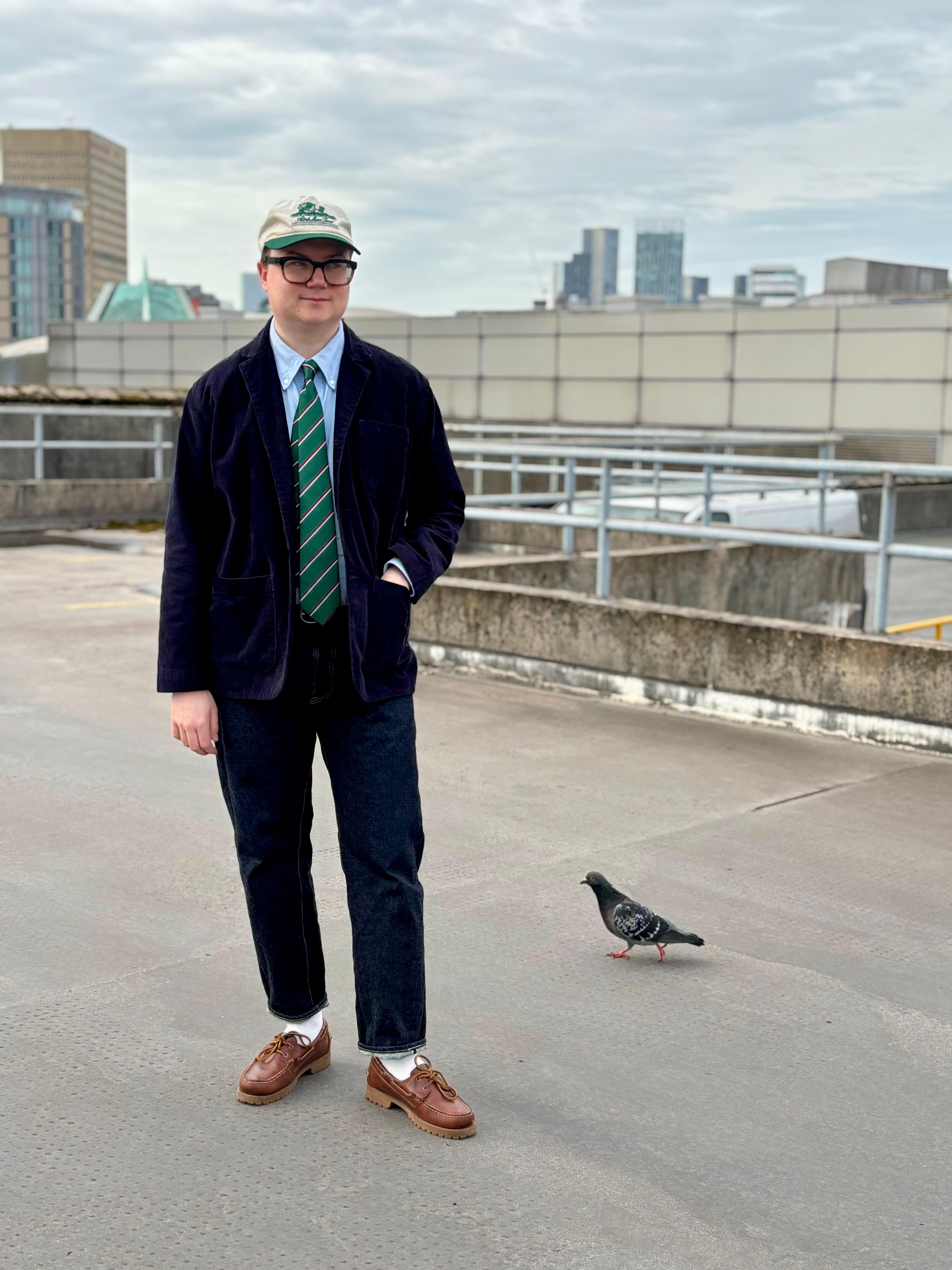
These days I tend to lean more towards wider or straight fits. More recently, I’ve gone for the SD-102CB, their wide straight model with a cinch back. It’s made from the same 15oz denim, which ages beautifully, but the extra width makes it much more interesting to wear, especially with a turn-up.
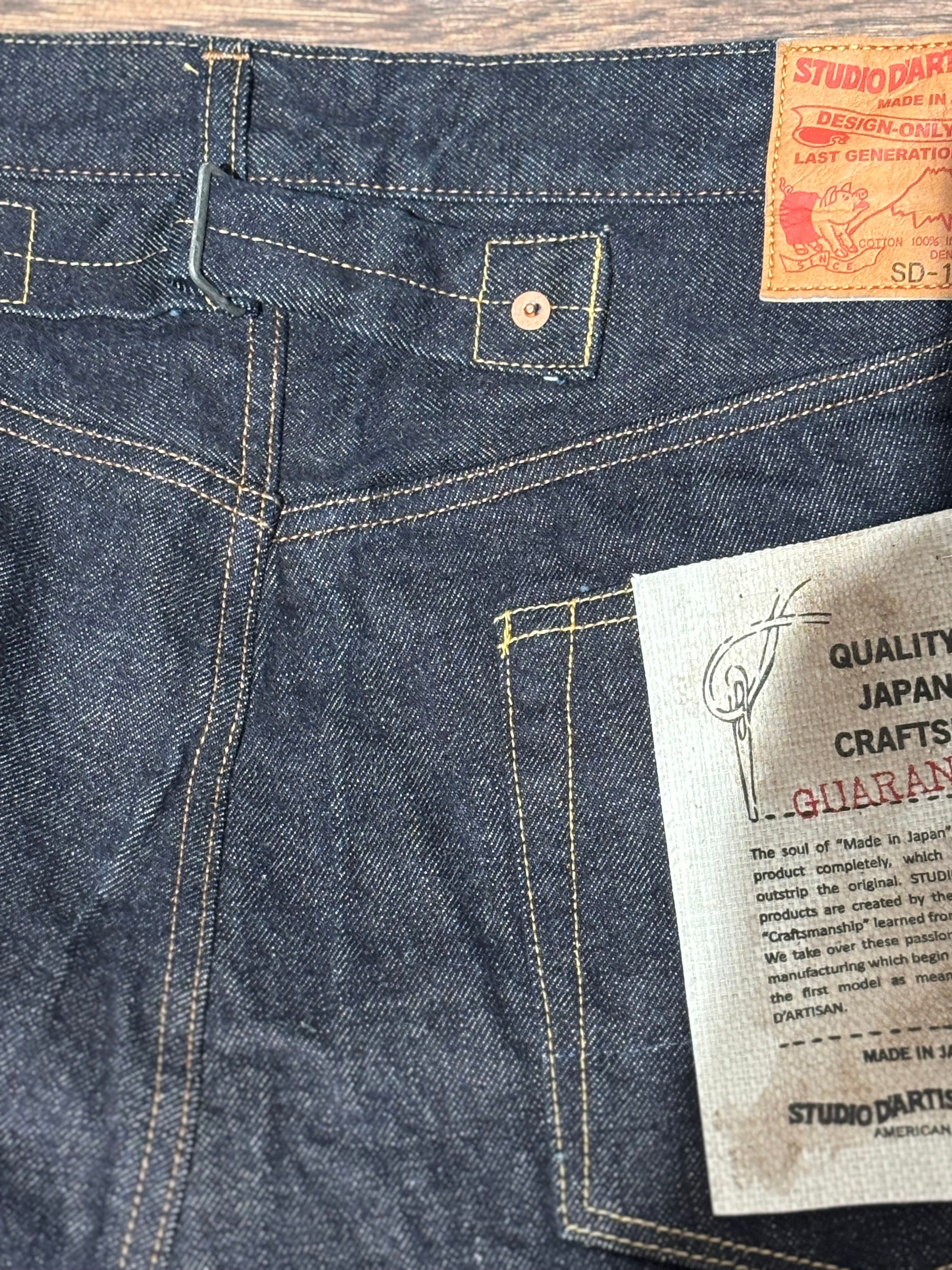
Another pair I own is the D1488U, based on 1950s American denim, a period when jeans began moving from workwear to fashion. It’s a faithful reproduction of the fading and fabric characteristics of that era, cut in a regular straight silhouette.
Denime - 1988
Founded by Yoshiyuki Hayashi, Denime took things further than anyone had before, obsessively studying vintage Levi’s, especially the XX models, and recreating them as faithfully as possible.
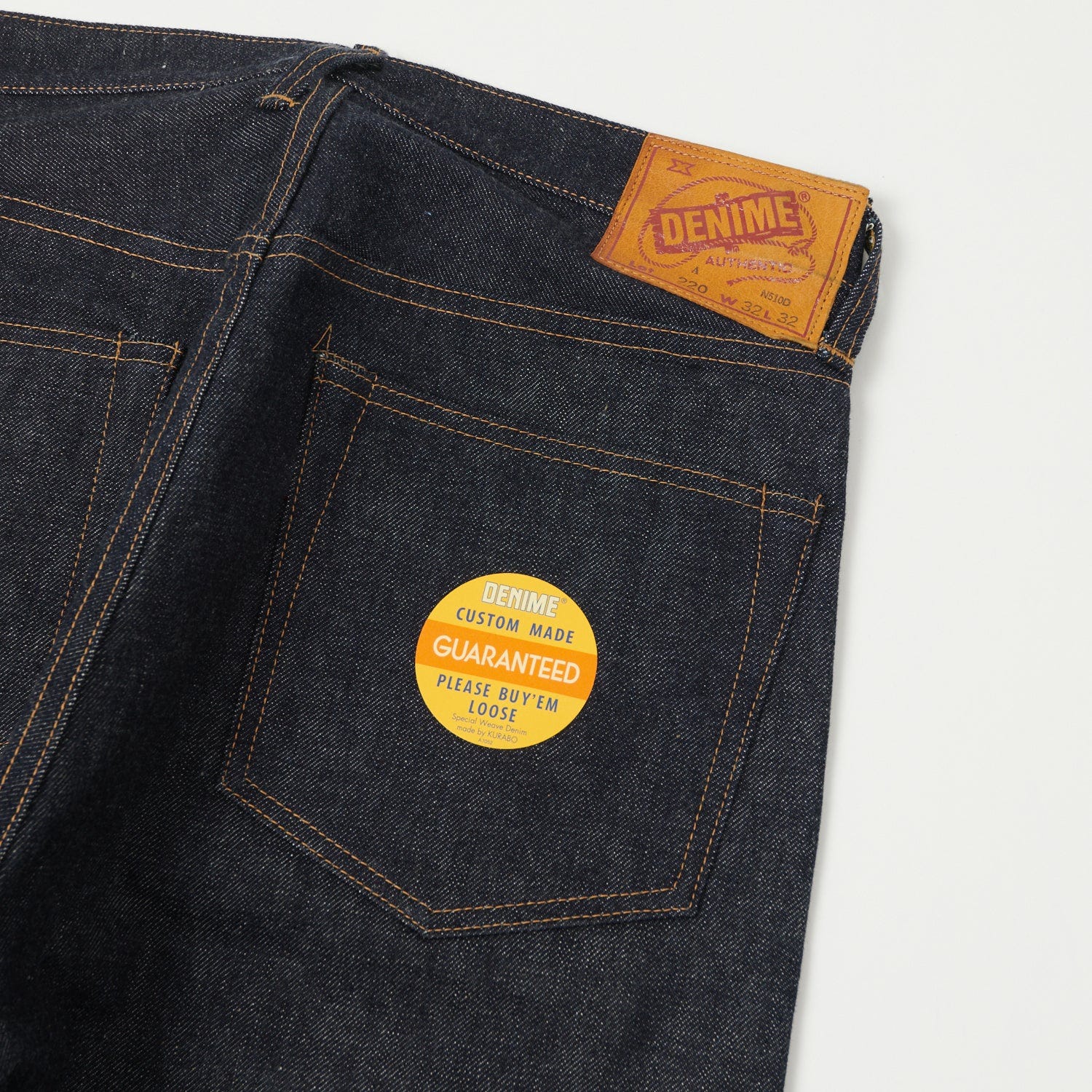
Denime were among the first to closely study vintage denim shrinkage and fabric behaviour, not just appearance. That level of attention set a new standard for Japanese denim.
Their meticulous approach didn’t just preserve tradition, it built on it. By studying what brands like Levi’s, Wrangler, and Lee had done right in the past, Denime maintained the original details while adding to the story of the jeans.
This almost archivist-like approach shows just how much we have to thank Denime for, not only in the world of Japanese denim but in fashion more broadly. What they did paved the way for other brands, set a high benchmark, and really demonstrated what Japanese denim could be.
Evisu – 1991
Evisu isn’t the most Ivy-friendly label, but it’s still part of the conversation. Founded by Hidehiko Yamane in Osaka, the brand was originally going to be called Evis, after Ebisu, the Japanese god of prosperity. The name was changed to Evisu, likely to avoid legal issues with Levi’s, and it’s often joked about as “Levi’s sue.”
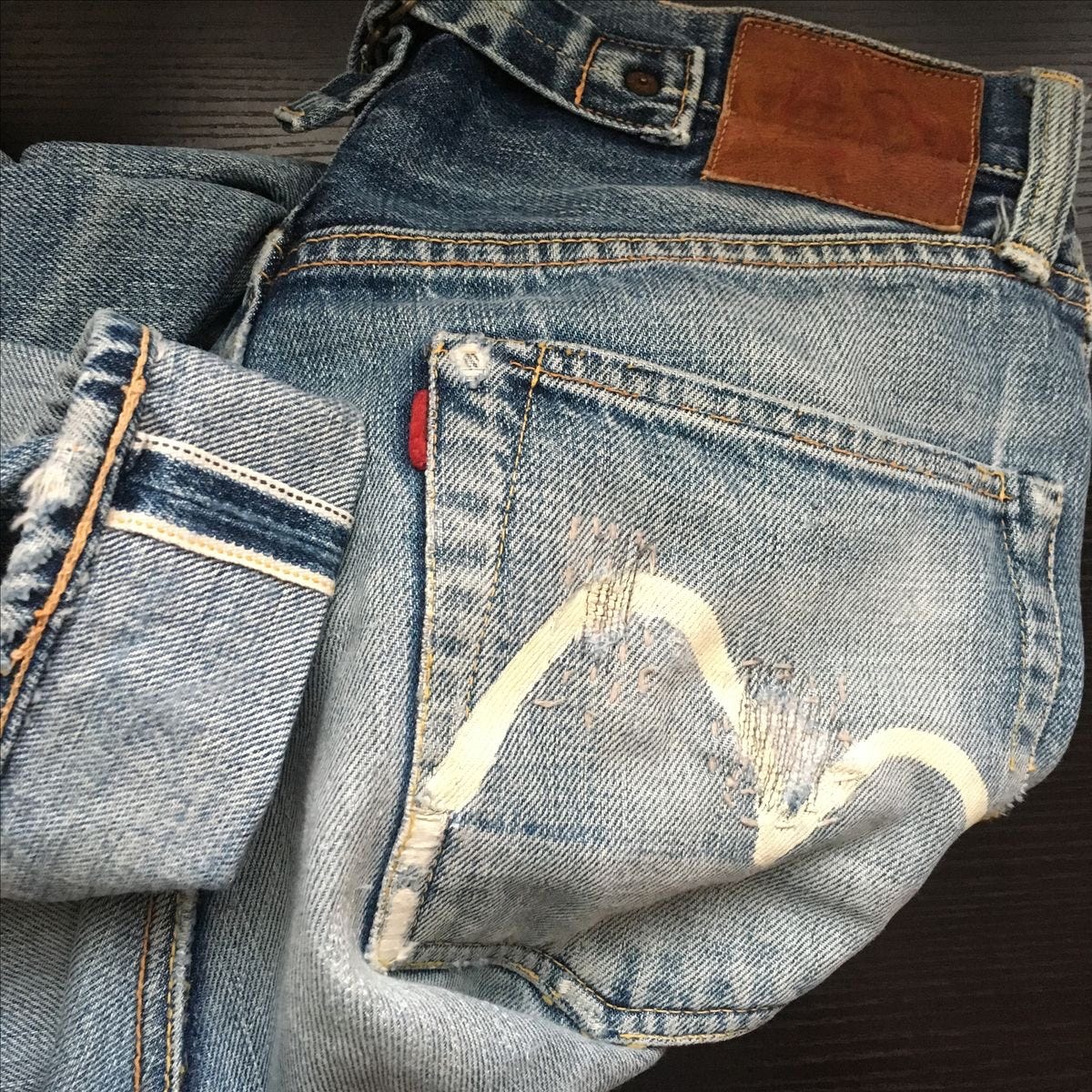
Evisu brought energy and visibility to the scene, especially with their hand-painted seagull arcs on the back pockets, which quickly became their signature. Early on, Yamane was reportedly making around 14 pairs a day by hand, painting the gulls himself. That small-scale obsession is a hallmark of the brand’s early days.
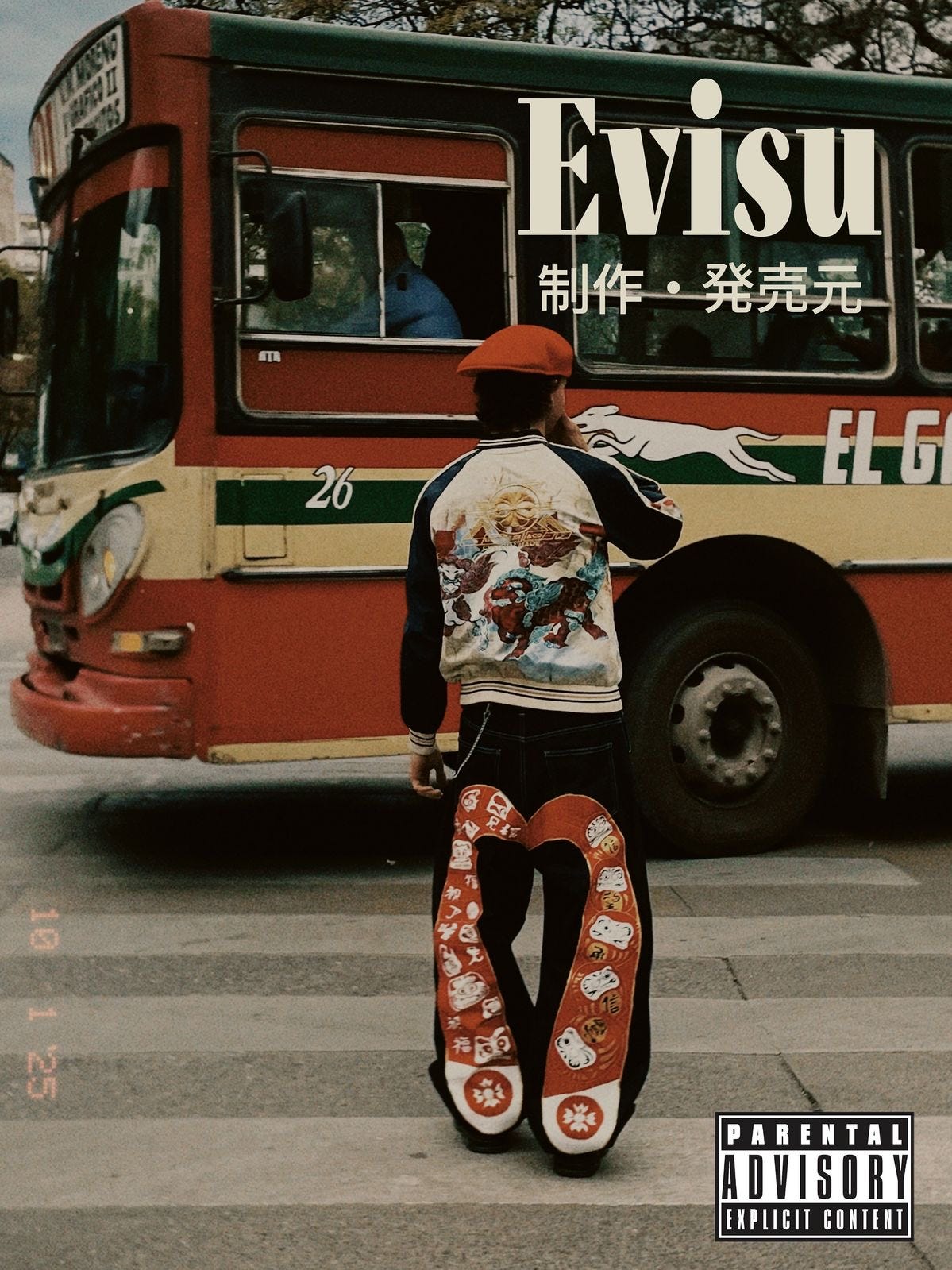
Like the rest of the Osaka Five, Evisu also made use of vintage shuttle looms at a time when most of the world had moved on, helping bring that older style of denim production back into focus. They were among the first Japanese denim brands to gain international attention in the late 90s and early 2000s, pushing Japanese denim beyond a niche interest.
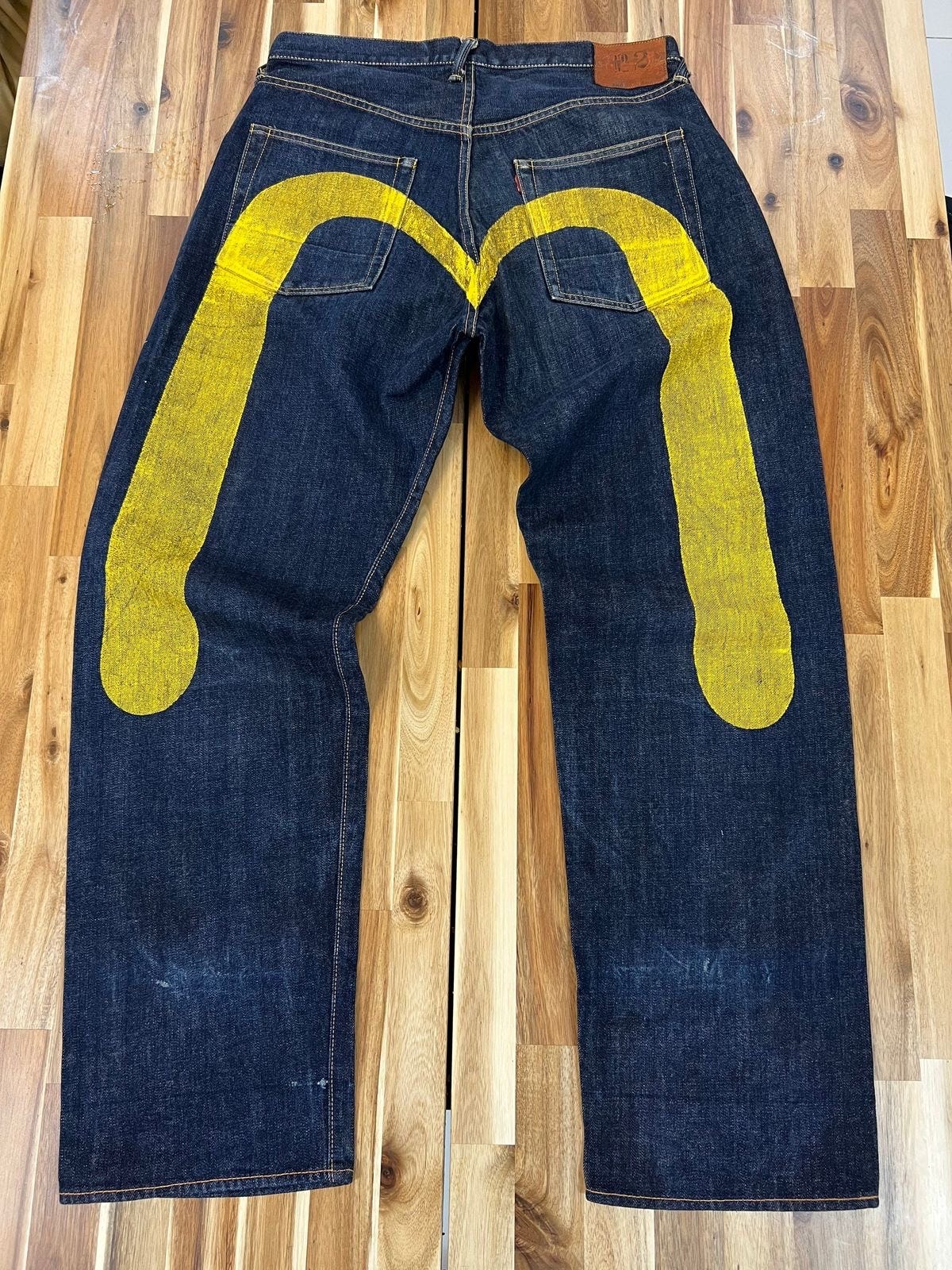
Those hand-painted gulls are what really set Evisu apart. They’ve become a badge of honour for enthusiasts, appearing in different colours over the years, including yellow, which brings to mind a certain set of golden arches, though unintentionally.
Warehouse & Co. - 1995
Founded by brothers Kenichi Shiotani and Koji Shiotani, Warehouse & Co. focused on recreating not just denim, but the entire feel of vintage garments, from fabric to construction through to how they age over time.
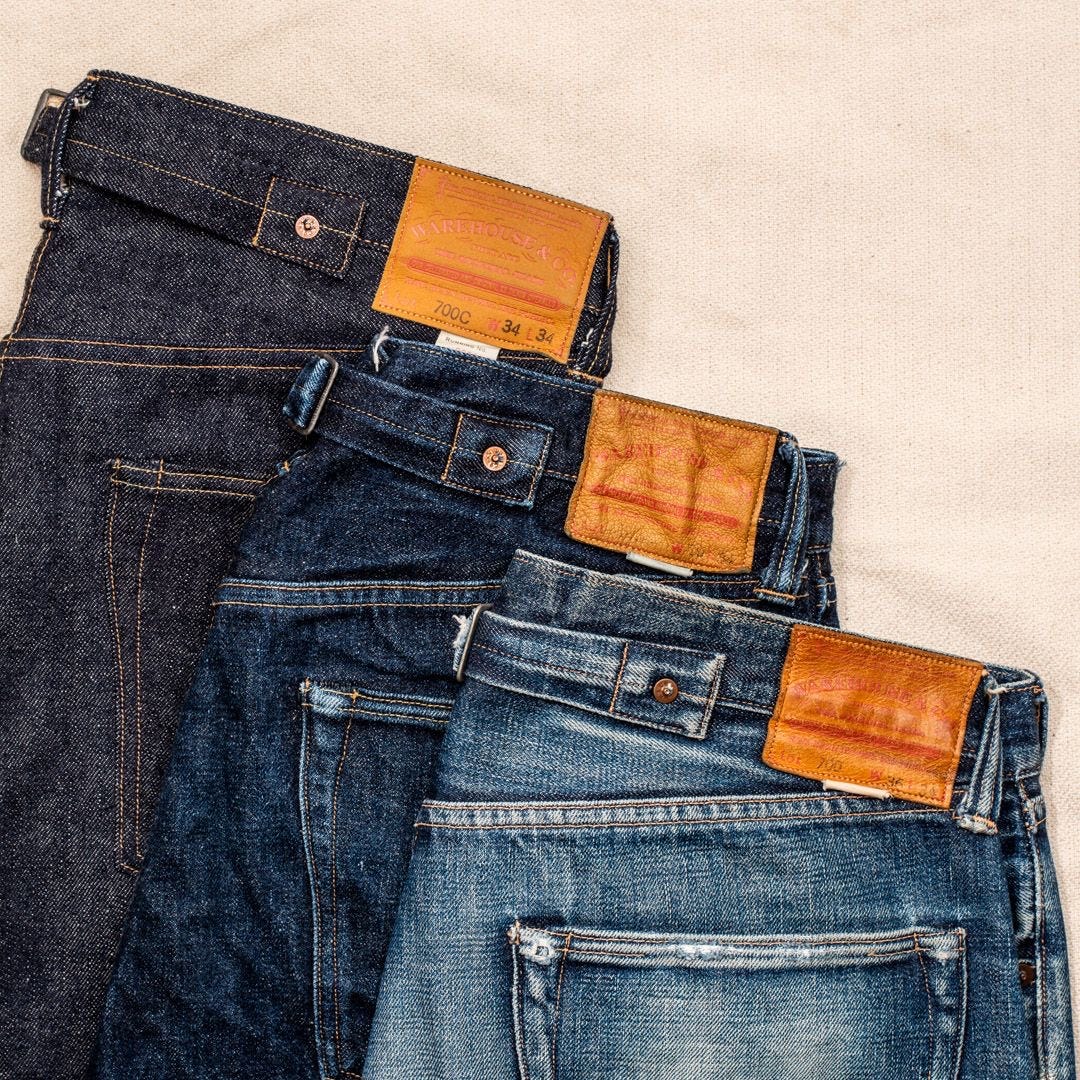
They developed their own “deadstock blue” fabric, aiming to replicate how untouched vintage denim would have originally looked before any wear.
What I’d say about Warehouse is that they don’t just do denim well, they do garments across the board to a really high standard. I’ve got one of their heavyweight sweatshirts that I picked up from Hinoya in Tokyo, and it’s excellent.
If you’re into reproduction clothing more broadly, not just jeans, they’re one of the best to look at. Their sportswear in particular stands out, especially if you’re into that mid-century athletic look.
Fullcount - 1995
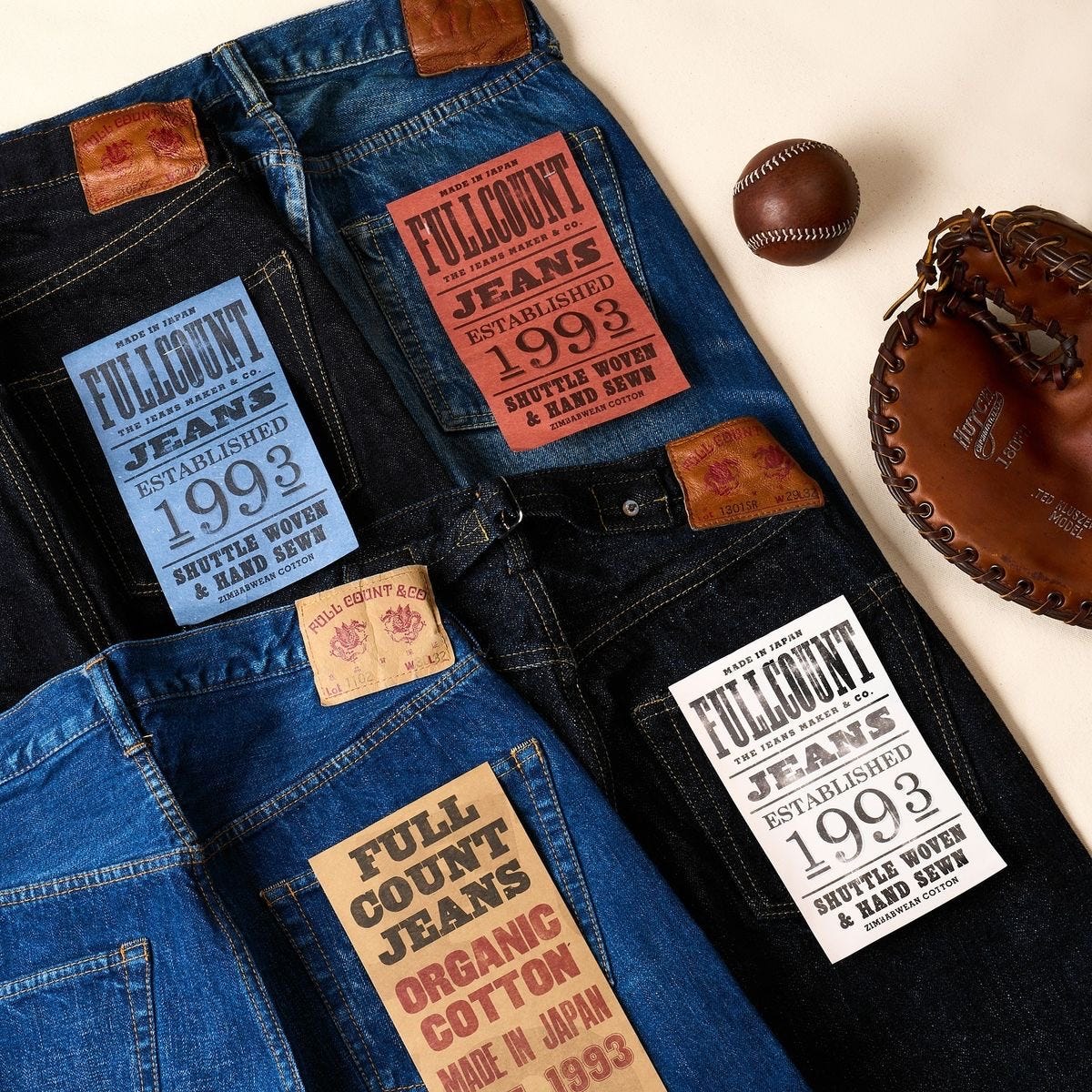
Founded by Mikiharu Tsujita, Fullcount took a slightly different route by using Zimbabwe cotton, which gives a softer, more wearable feel compared to other reproduction brands.
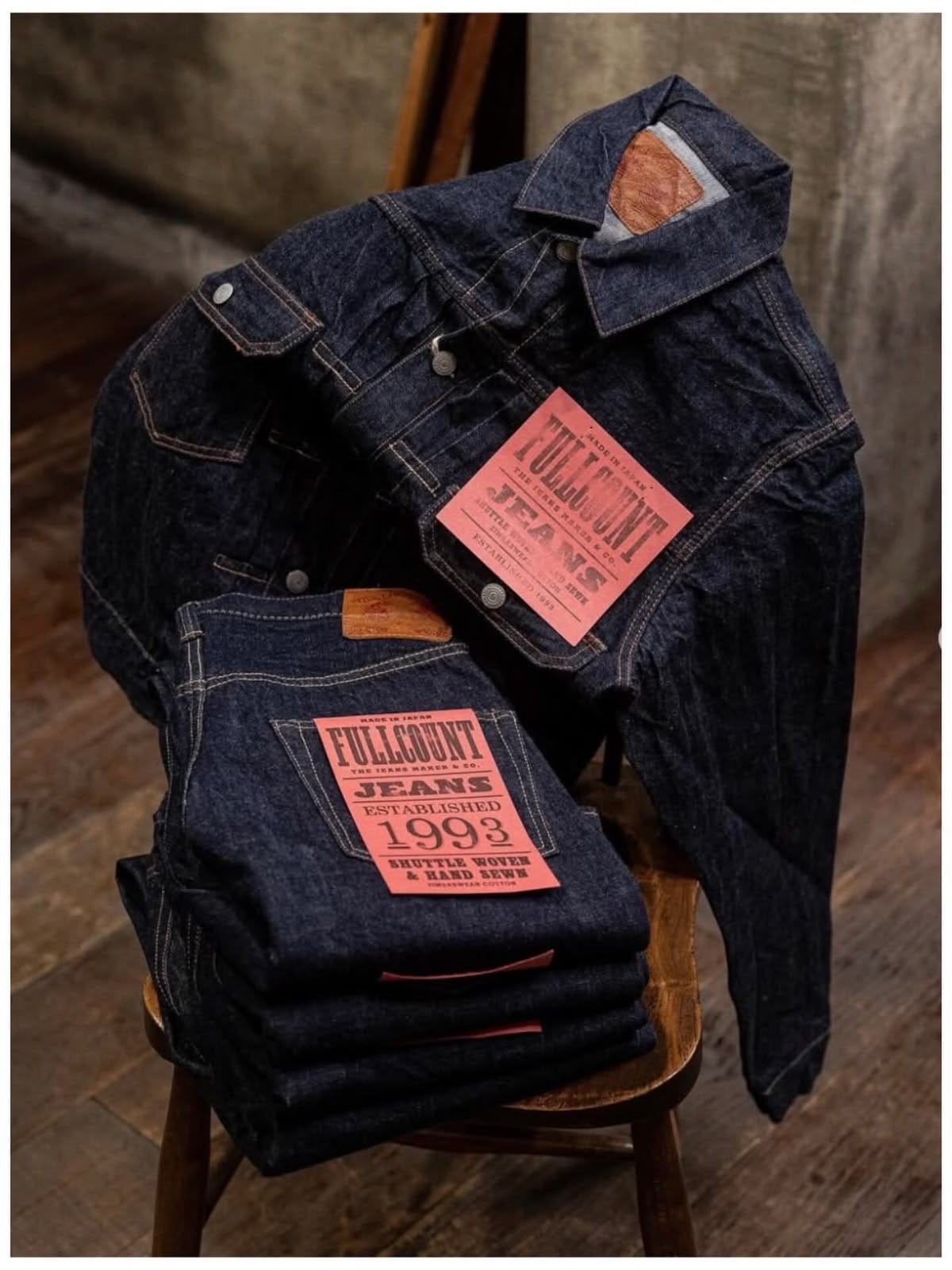
They’ve always prioritised comfort and movement over rigid accuracy, which makes them one of the easiest entry points if you actually want to wear your jeans properly.
Like Warehouse & Co., Fullcount makes excellent garments across the board. Their chinos in particular are really well done, and worth looking at if you want something that sits alongside denim rather than replacing it.
I’d recommend them if you’re looking for something heritage-inspired that still feels easy to live in. It’s a good reminder that it’s not just about denim. The Japanese approach to reproduction clothing as a whole is a really interesting path to go down.
The thing to remember about Japanese denim is that everything above might read like a timeline, or a story of the Osaka Five, but it’s not a checklist.
It doesn’t mean your jeans are only worth wearing if they come from one of those five brands.
Japan has no shortage of incredible denim makers beyond them. Brands like Samurai Jeans, Pure Blue Japan, UES, Boncoura, Sugar Cane, Oni Denim and Momotaro Jeans all bring something different to the table.
Each one tells its own story, and each takes a slightly different approach, but they all share that same level of care and craftsmanship that Japan does so well.
Are they all Ivy-friendly? Not necessarily. But then again, not everything has to be. Some lean closer than others, particularly the reproduction-focused brands, but that’s only part of it.
What I’ve found is that once you start getting into Japanese denim, it rarely stops at one pair. It opens things up. Not just in terms of what you buy, but how you think about clothes in the first place.
Excellent post. I've recently got into Two Cats Brand (TCB) and their 40s and 50s models are fantastic, and very reasonably priced for 'made in Japan' denim. Another great entry point jean.
Another good one, Tom. On my last two Japan trips I purchased selvedge denim pieces from FOB and Resolute. The former has a light, faded indigo wash while the latter is a much darker wash. Both honor the rich design legacy you speak about in your post. The fits are perfect and I love them. I am also a big fan of Blue Blue but don't have any of their pieces yet.